Agricultural waste is often viewed as a disposal challenge — but innovative biotechnology is transforming it into a valuable resource for sustainable manufacturing. In a recent study published in Bioresource Technology (IF 9.0), researchers from Shanxi Academy of Advanced Research and Innovation developed a novel waste-to-wealth approach by using distillers grains (DGS) as a substrate for the biosynthesis of echinocandin B (ECB), an important precursor for antifungal drugs.
To improve ECB production, the research team systematically optimized fermentation conditions and introduced a combined strategy of Trichoderma reesei pretreatment and amino acid supplementation. This approach significantly enhanced fermentation performance, rise ECB production level up to 2017.6 μg/g dry substrate.
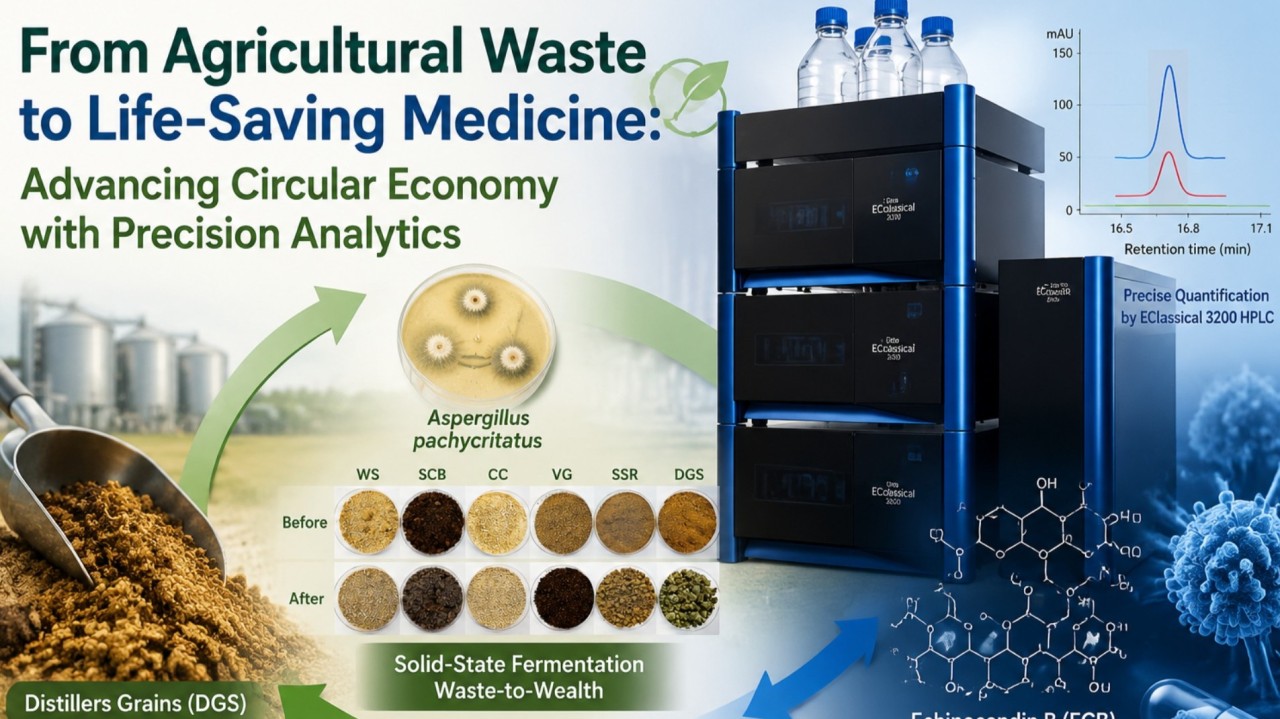
During the study, the authors used Elite's EClassical 3200 HPLC system to quantitatively analyze ECB in fermentation extracts. The system was equipped with a C18 selective column and used a gradient elution of acetonitrile/water (containing 0.1% trifluoroacetic acid) as the mobile phase, with detection at 227 nm. EClassical 3200 HPLC successfully verified the synthesis of ECB and provided accurate and reliable quantitative data for comparing ECB yields under different fermentation conditions (Relevant chromatograms are shown in Figures 1D, 2B, 3B, 3D, 3F, 4B, 5B, 5C, and 6F).
The high sensitivity and stability of EClassical 3200 HPLC provided core experimental evidence for evaluating pretreatment efficiency, optimizing culture conditions, and validating the effectiveness of amino acid supplementation strategies, thereby strongly supporting the development of an efficient, low-cost, and environmentally friendly production process for ECB within a Circular Bio-Manufacturing framework.
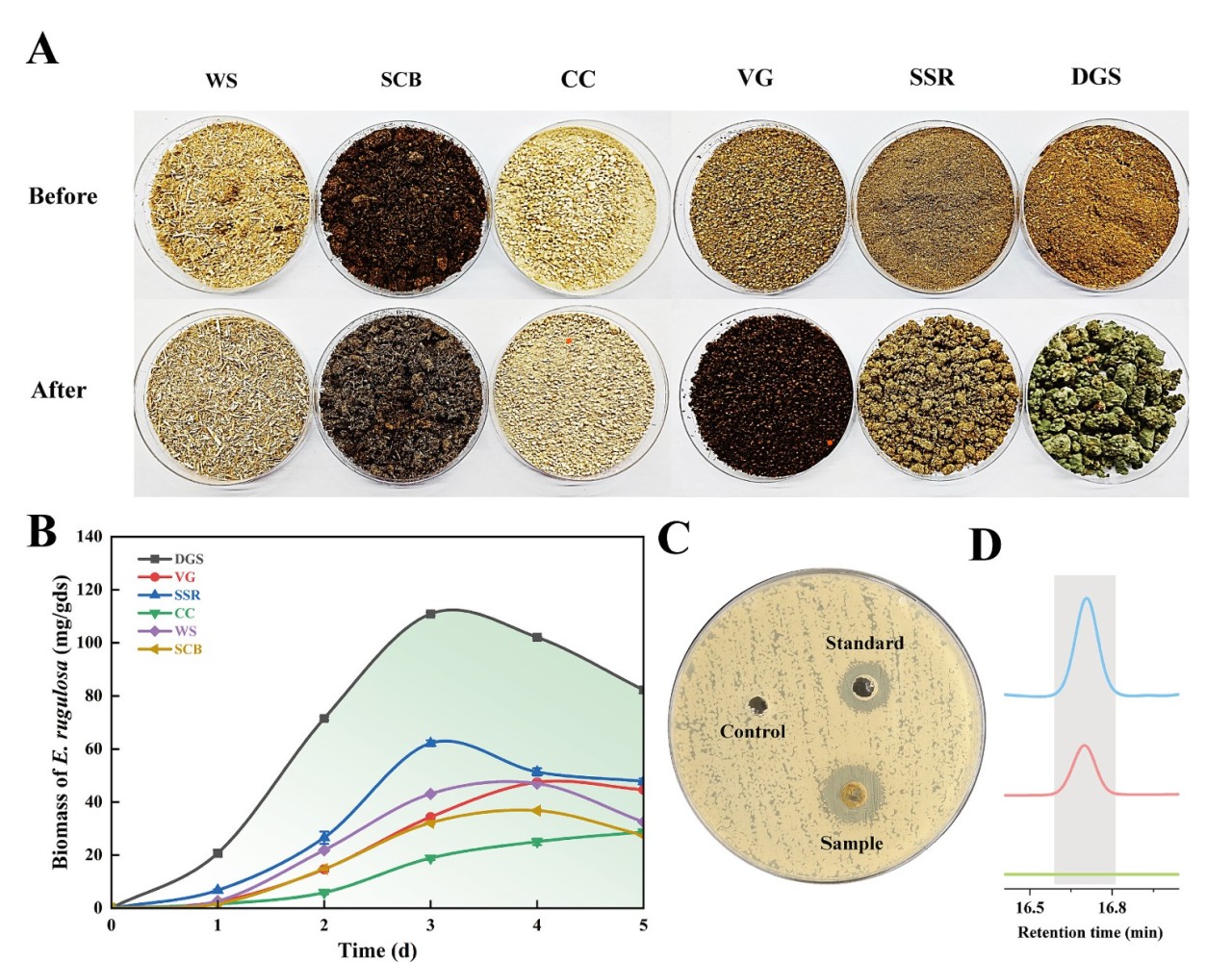
Fig. 1. (C) Anti-Candida assays were conducted using extracts from the distillers grains medium. (D) HPLC was employed to assess the biosynthesis of echinocandin B..
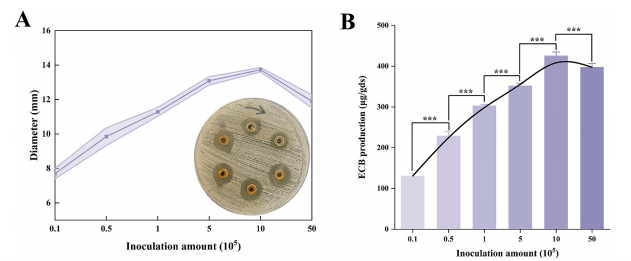
Fig. 2. (B) The titer of echinocandin B biosynthesis with different inoculation amounts was quantified using HPLC
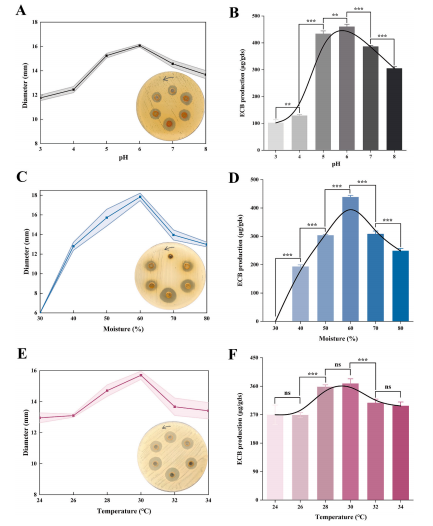
Fig. 3. The titers of echinocandin B biosynthesis under different pH (B), moisture (D), and temperature (F) were quantified using HPLC.
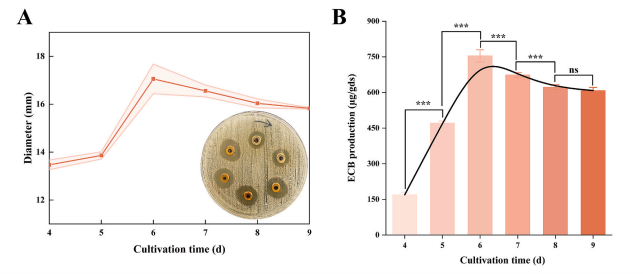
Fig. 4. (B) The titers of echinocandin B biosynthesis at different incubation periods were quantified using HPLC.
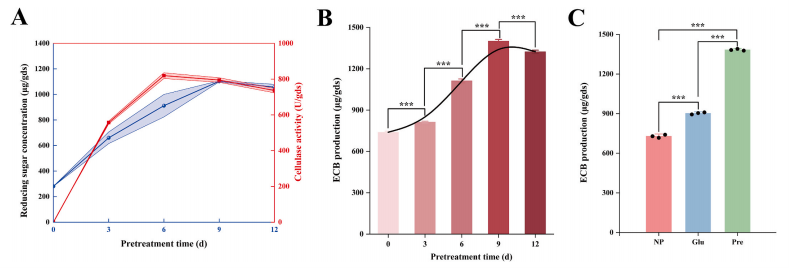
Fig. 5.(B) The titers of echinocandin B biosynthesis in distillers grains with different pretreatment time were quantified using HPLC.
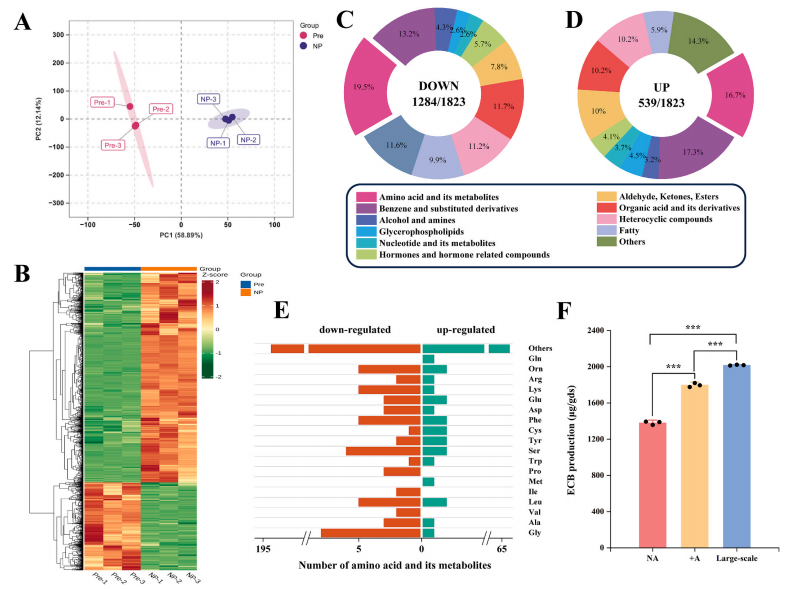
Fig. 6.(F) The titers of echinocandin B biosynthesis in distillers grains supplemented with an amino acid cocktail under optimized conditions at small- or large-scale were quantified using HPLC.