The column oven is an essential accessory for high performance liquid chromatography. It precisely and stably controls the operating temperature of the chromatographic column, playing a critical role in improving column efficiency, enhancing peak resolution, shortening retention times, reducing system backpressure, and ensuring the reproducibility of analytical results.
In gas chromatography, column temperature is a key parameter that determines the retention time of compounds. In practice, the choice of column temperature requires careful attention to the following aspects:
Protecting the lifetime of the stationary liquid. If the column temperature exceeds the maximum allowable temperature of the stationary liquid, the stationary liquid will be lost with the carrier gas. This not only shortens the column's service life but also contaminates the detector with residual stationary liquid, directly affecting the accuracy of analytical results.
Balancing separation efficiency and analysis speed. Setting the column temperature too high reduces the partition coefficient (K value) of each component, leading to decreased resolution. Conversely, setting it too low significantly reduces mass transfer efficiency, causing column efficiency to drop while unnecessarily prolonging analysis time.
Controlling retention time stability. Column temperature is closely related to retention time: as temperature increases, peaks elute faster and retention times shorten. Experimental data shows that a 1 °C change in column temperature alters component retention time by approximately 5 %. If the temperature fluctuates by 5 %, the retention time may change by up to 20 %, seriously compromising the reliability of qualitative identification.
Maintaining chromatographic peak shape. Increasing column temperature generally narrows peak width and increases peak height, while peak area remains essentially unchanged. However, it should be noted that changes in peak height directly affect the accuracy of quantification methods based on peak height; lowering the column temperature produces the opposite effect.
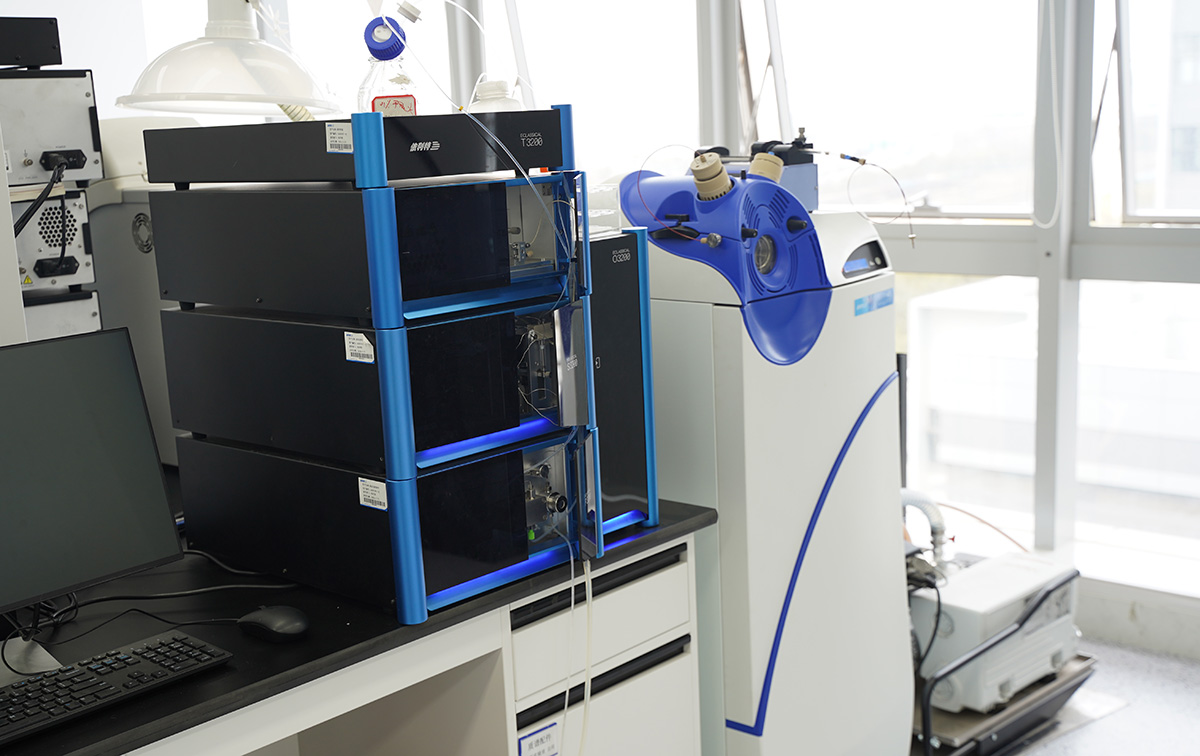
Given the significant impact of column temperature on analytical results, selecting the appropriate column temperature and implementing precise control are particularly important. First, ensure that the column temperature does not exceed the maximum allowable temperature of the stationary liquid (i.e., the column's maximum operating temperature), to prevent stationary liquid loss that could compromise column performance and service life. Second, determine the optimal column temperature through systematic experimentation. It is generally recommended to set the temperature 20‑30 °C below the average boiling point of the sample components. This allows the desired separation of difficult‑to‑resolve components while minimising analysis time. For samples with a wide boiling point range, programmed temperature ramping is recommended, where the temperature is gradually increased according to a preset linear heating rate to achieve optimal separation.
Through scientifically sound column temperature control and optimisation, the overall performance and reliability of chromatographic analysis can be significantly enhanced.