In daily experimental analysis, the high performance liquid chromatograph (HPLC) is a “core partner” for many lab operators. It can handle non‑volatile, thermally unstable samples. Whether it is separating trace components in complex mixtures or preserving the activity of biochemical substances, its high resolution and high sensitivity are indispensable. However, many times we focus on sample preparation and mobile phase composition, yet overlook subtle changes in the surrounding environment – changes that can quietly lead to data deviations, poor reproducibility, or even instrument failure. Below, based on everyday operating scenarios, we discuss how environmental factors affect HPLC and what details you should pay attention to, helping you avoid hidden pitfalls and obtain more reliable results.
1. Temperature Fluctuations: The “Hidden Interference” in Your Data
HPLC is sensitive to temperature at every step of analysis: mobile phase viscosity changes with temperature, the retention characteristics of the column are affected, and even the detector response may “drift”. The end result is retention time shifts, broader peaks, and even failure to separate target peaks.
Details to watch during operation
Keep room temperature stable – avoid sudden changes. Frequent on/off cycling of air conditioners in summer or proximity to heating in winter can cause baseline drift. Place the instrument away from doors, windows, and air conditioner vents. Control lab temperature between 20 °C and 30 °C, with fluctuations no more than 2–3 °C per day. If summer room temperature exceeds 30 °C, remember to check the mobile phase in advance because high temperatures can generate bubbles. You can sonicate the mobile phase for a few minutes or let it equilibrate in the lab for one hour before use to avoid unstable pump pressure.
Stabilise the column oven temperature. Calibrate the column oven temperature before each run. For example, set it to 30 °C and wait 10 minutes to see if the actual display is stable. If the column oven is out of control, the partition coefficient changes and resolution is definitely affected. One colleague once encountered a column oven fan failure that went unnoticed; as a result, the retention time of the same sample injected repeatedly differed by 2 minutes. Only later was it found that the temperature had not been stabilised.
2. Humidity and Dust: The “Chronic Wear Source” of Your Instrument
The optical components of an HPLC (e.g., the deuterium lamp of a UV detector, the flow cell) and the electronic circuitry are particularly sensitive to moisture and dirt. High humidity can cause optical parts to become mouldy, and dust can block tubing – leading either to decreased sensitivity or to skyrocketing pump pressure.
Daily actions to take
Control humidity carefully. Keep lab humidity preferably below 60%. During the rainy season, use a dehumidifier. In one lab, humidity exceeded 70%, causing a mist to form on the inner wall of a UV detector flow cell; baseline noise increased, and several cleaning cycles were needed to restore performance. Also, cover the instrument with a dust cover when not in use, and wipe the outer casing once a week – especially around the injection port – to prevent sample residues or dust from entering.
Vent harmful gases promptly. Methanol and acetonitrile from mobile phases evaporate and produce corrosive vapours. Over time, these can corrode pump seals and tubing. Therefore, always handle mobile phases inside a fume hood when preparing or changing them. After an experiment, do not turn off the fume hood immediately; let it run for an additional 10 minutes to exhaust residual vapours. If the lab has no fume hood, open windows for at least 30 minutes to avoid harmful gases lingering in the room.
3. Vibration and Electromagnetic Interference: Easily Overlooked “Signal Killers”
The solvent delivery pump needs a stable environment to deliver liquid accurately, and detector signals are also susceptible to interference. If the instrument is placed near a centrifuge, an air conditioner compressor, or close to an elevator or high‑power motor, vibration can cause baseline fluctuations, and electromagnetic interference can make signals “jump”.
Placement and power supply considerations
Use a stable, dedicated bench. Do not place the HPLC on the same bench as a centrifuge or shaker. A colleague once put a centrifuge next to an HPLC for convenience; during centrifugation, spurious peaks appeared in the baseline. After moving the centrifuge away, the baseline became smooth immediately. The bench must be fixed – do not use a movable cart, as slight shaking can affect pumping precision.
Use a dedicated power supply. Equip the HPLC with a voltage stabiliser, and avoid sharing a power outlet with other high‑power equipment (e.g., hot plates, vacuum ovens). In one lab, unstable voltage caused the pump flow rate to fluctuate, leading to poor peak area reproducibility. The problem was solved after installing a voltage stabiliser. Also, ensure the instrument is properly grounded to prevent electromagnetic interference affecting detector signals.
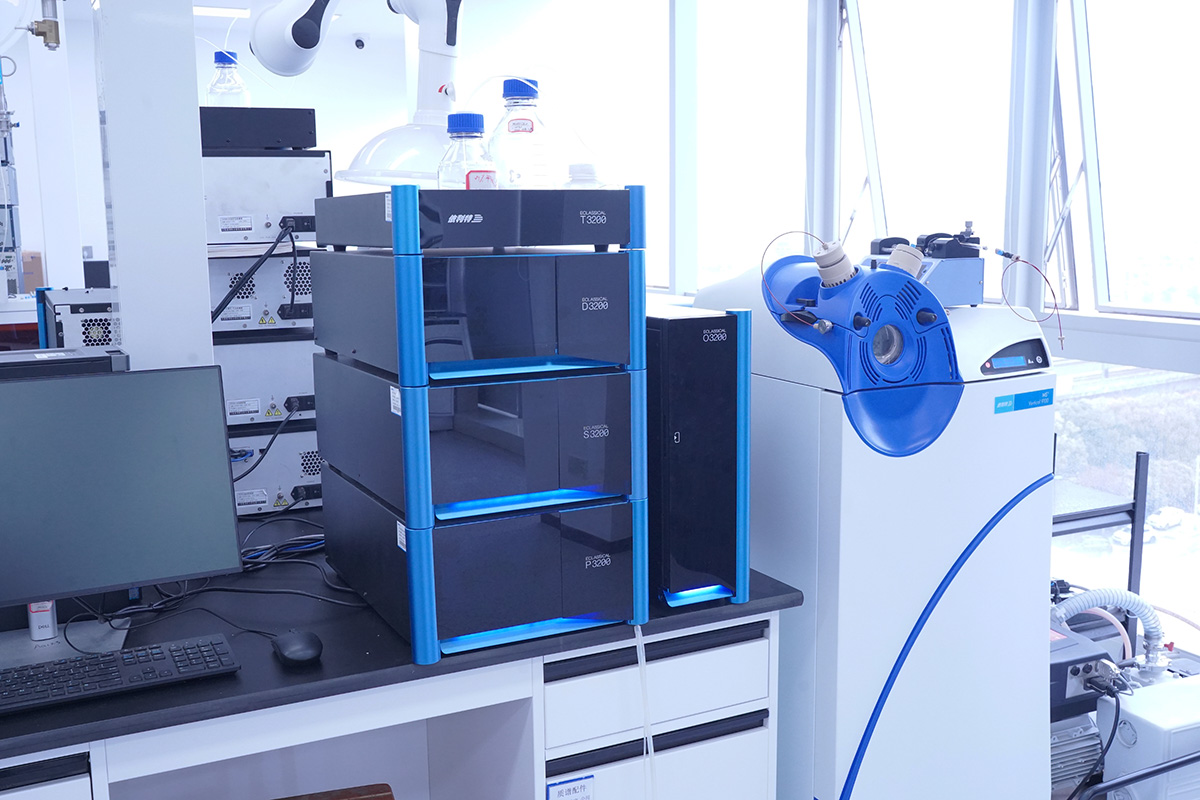
4. Light and Airflow: The “Enemy” of Optical Detectors
UV and fluorescence detectors are very sensitive to light. Strong light increases baseline noise. Direct air flow onto the instrument causes local temperature changes, making retention time irreproducible.
Correct positioning
Avoid direct sunlight. Fit lab windows with blinds, especially south‑facing windows. In summer, strong sunlight directly hitting the detector will cause irregular baseline fluctuations. Also, try not to position the instrument display facing a light source, as glare may lead to accidental button presses.
Do not let airflow blow directly onto the instrument. Place laboratory vents and air conditioner outlets away from the HPLC. In one case, an air vent was directly above the instrument; when the ventilation was on, the airflow hit the column oven, causing temperature fluctuations and poor retention time reproducibility. The problem was solved by redirecting the vent. If the vent cannot be moved, install a baffle above the instrument to deflect the airflow.
5. Cleanliness and Space: Assurance for Purity Analysis
When performing trace analysis, airborne particles and volatile organic compounds can become contaminants. Particles can block the injection needle or contaminate the mobile phase; volatile organics may be adsorbed by the column, affecting the detection results.
Daily management musts
Protect mobile phases and samples from contamination. Filter mobile phases through 0.22 µm membranes; also filter samples (unless they are particle‑free pure solutions). Do not reuse filters to avoid cross‑contamination. For easily oxidised mobile phases (e.g., tetrahydrofuran), purge with nitrogen before each use, and seal and store leftover in a refrigerator. Do not allow prolonged contact with air, which can degrade the mobile phase and affect separation.
Leave space around the instrument. Keep at least 10 cm clearance at the sides and rear of the HPLC for heat dissipation and maintenance. Do not stack reagent bottles or sample boxes next to the instrument – they could easily tip over and might block ventilation openings, causing the internal temperature to rise. Clean the air conditioner filter once a week to prevent dust from being blown onto the instrument, where it could block tubing or affect electronic circuits.
Final reminder: Take two minutes before each start‑up to check the environment – touch the column oven to see if it is working properly, look at the hygrometer reading, listen for any abnormal pump noise. These seemingly simple habits can help you avoid many unnecessary troubles and keep your HPLC in good shape.